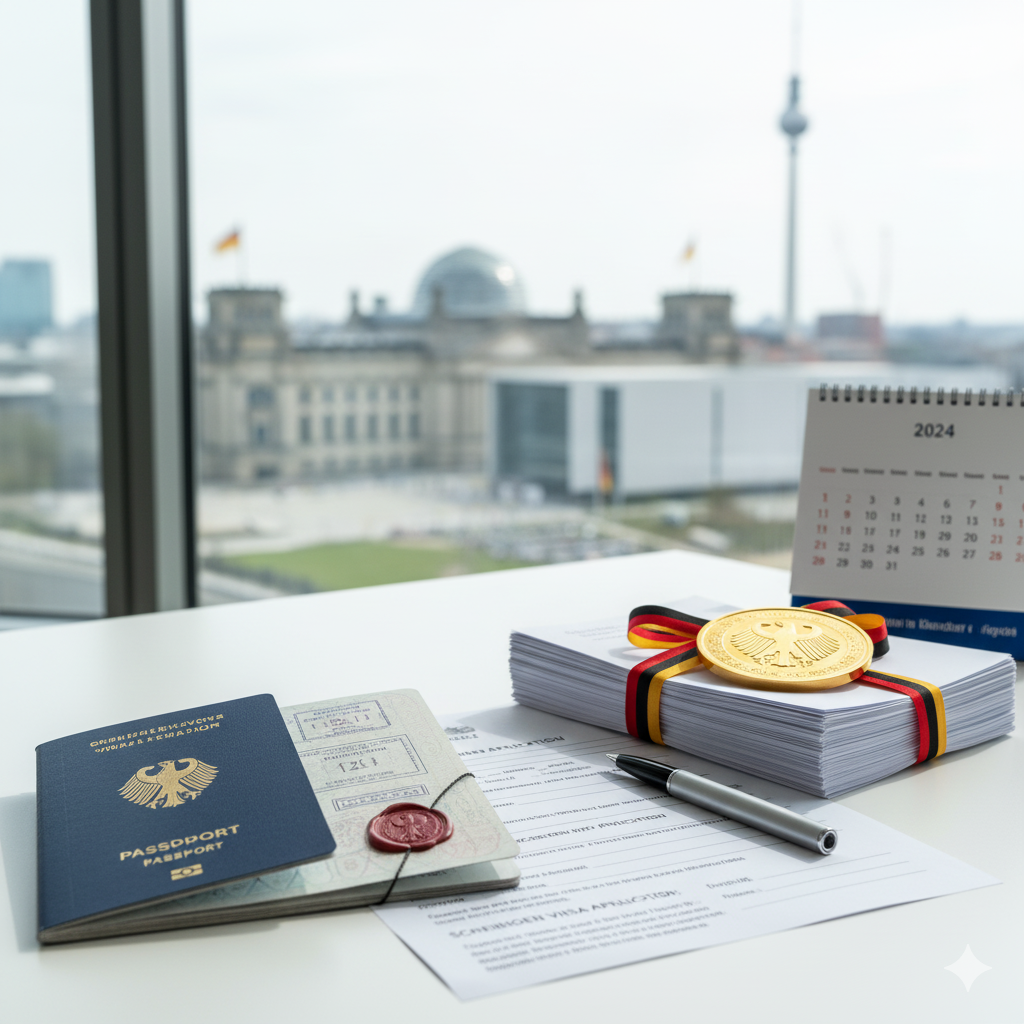

A Complete Guide to German Visa: Everything You Need to Know
Germany, known as the land of innovation, engineering excellence, and rich culture, attracts millions of visitors every year. Whether you are planning to study, work, join your family, or explore its scenic landscapes, you will most likely need a German visa. Understanding the visa types, eligibility requirements, and the application process is essential for a smooth journey.
Why Do You Need a German Visa?
Germany is a member of the Schengen Zone, which allows free movement across 27 European countries. However, travellers from most non-EU countries must apply for a visa to enter Germany. Your purpose of visit—whether short-term or long-term—decides the type of visa you should apply for
Types of German Visas
-
Schengen Visa (Short-Stay Visa)
Duration: Up to 90 days.
Purpose: Tourism, business, medical treatment, visiting friends or relatives.
Validity: Allows travel across the entire Schengen Zone.
-
National Visa (Long-Stay Visa / D Visa)
Duration: More than 90 days
Purpose: Work, studies, research, family reunion, training, or permanent settlement
This visa is usually the first step towards obtaining a residence permit in Germany.
-
Work Visa
For professionals with a job offer from a German employer
Includes EU Blue Card for highly skilled workers with higher salaries
-
Student Visa
For those admitted to a German university or preparatory course
Allows part-time work along with studies
-
Job Seeker Visa
For skilled professionals seeking employment in Germany
Valid for up to 6 months
-
Family Reunion Visa
For spouses, children, or parents joining their family members legally residing in Germany
-
Business Visa
For business meetings, conferences, or short-term professional visits
-
Eligibility Criteria
Eligibility varies depending on the visa type, but in general, applicants must:
Have a valid passport
Provide proof of financial means
Show confirmed travel insurance (Schengen visas require €30,000 coverage)
Submit purpose-related documents (job contract, admission letter, marriage certificate, etc.)
Demonstrate genuine intention to return or settle legally
-
Required Documents
Common documents include:
Completed visa application form
Valid passport with at least 2 blank pages
Recent passport-sized photos (biometric)
Proof of accommodation in Germany
Flight itinerary
Health insurance certificate
Proof of financial funds (bank statements, sponsorship letter, blocked account)
Visa fee payment receipt
Supporting documents depending on visa type (employment letter, admission letter, family documents, etc.)
-
Application Process
1. Determine the Visa Type – Based on your purpose and stay duration.
2. Book an Appointment – Through the German Embassy/Consulate or VFS Global.
3. Prepare Documents – Ensure accuracy and completeness.
4. Submit Application & Biometrics – Fingerprints and interview at the visa center.
5. Pay Visa Fee – Fees vary: around €80 for Schengen Visa, higher for national visas
6. Wait for Processing – Schengen visas take 10–15 days, national visas can take weeks to months.
7. Receive Visa Decision – Collect your passport with visa sticker or decision notice.
-
Processing Time & Fees
1. Schengen Visa: 10–15 working days, approx. €80
2. National Visa: 6–12 weeks or more, fee approx. €75
3. Student/Job seeker visas may take longer depending on embassy workload.
-
Benefits of a German Visa
1. Access to the entire Schengen Zone (for Schengen visa holders)
2. World-class education and career opportunities
3. Pathway to EU residency and citizenship (for long-term visa holders)
4. Opportunity to reunite with family and build a life in one of Europe’s strongest economies
-
Common Challenges & Tips
1. Incomplete Documents – Always cross-check embassy checklists
2. Long Waiting Times – Book appointments early
3. Proof of Funds – Students must show approx. €11,000 in a blocked account
4. Insurance Issues – Ensure you purchase valid Schengen-approved insurance
FAQs on German Visa
Yes, Indian citizens require a visa for both short-term and long-term stays
At least 3 months before your planned travel date.
Only under exceptional circumstances such as medical emergencies.
Not for Schengen visas, but for study, work, or family reunion visas, proof of German proficiency may be needed.
Yes, students can work up to 120 full or 240 half days per year.
Final Thoughts
Applying for a German visa can seem overwhelming, but with proper planning and complete documentation, the process becomes smooth. Germany opens doors not only to world-class opportunities but also to life in the heart of Europe.
If you are planning to visit, study, or settle in Germany, make sure you understand the right visa type and start your application well in advance.

Founded in 2019, 360 Medicare Personnel Private Limited is one of the leading healthcare recruitment agency. At 360medicare, we're more than just a healthcare recruitment agency; we're your partner in pursuing a rewarding career journey abroad.
- Privacy Policy | Terms & Conditions
Who We Are
Connect with us
- 360Medicare Personnel Limited, Units A-J, Austen House, Station View, Guildford, Surrey, GU1 4AR, United Kingdom
- VAT 346 3892 70
- +44 7413 149658 (UK) | +91 87146 15550 (IN)
- jobs@360medicare.co.uk